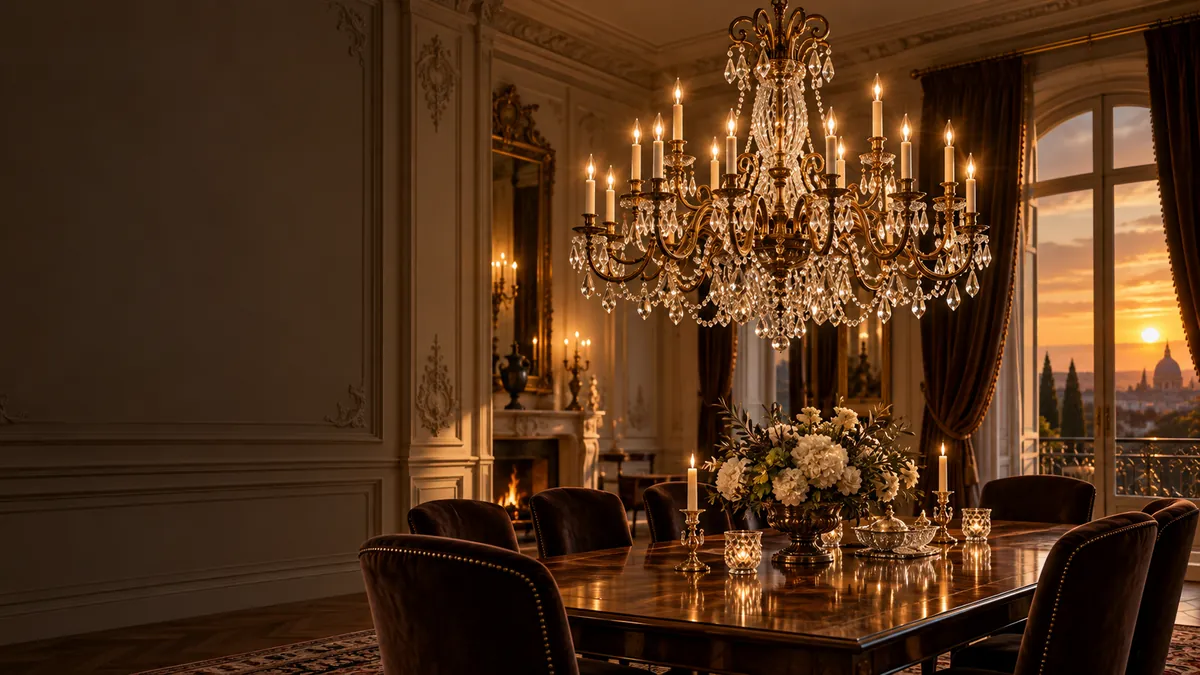
01 · Begin with the room
A dramatic chandelier can be a focal point; wall and table lamps can add quieter layers. Consider how the room is used, sight lines, daylight and ceiling height. Choose scale from measured dimensions, not a lifestyle image.
02 · Consider the material language
Crystal and clear glass create sparkle; translucent stone and fabric soften light; brass and bronze add warmth. Compare finishes against the furniture and architecture, and read the actual manufacturer’s material description.
03 · Read the light, not just the watts
Watts describe power consumption, while lumens describe declared light output. Colour temperature affects appearance and CRI indicates a measured rendering characteristic. These figures do not by themselves prove comfort or suitability; use verified information and consider the intended task.
04 · Plan suspension and installation
Confirm the fixture’s actual width, height, suspension adjustment range, ceiling fixing and weight. Shipping package dimensions are different. A qualified installer should assess electrical supply and structural support, especially for large crystal and multi-arm chandeliers.
05 · Check compatibility
Verify voltage, frequency, lamp sockets, light-source inclusion and replacement options. For dimming or smart control, confirm the exact compatible driver, controller, protocol and required gateway.
06 · Step outdoors carefully
Outdoor use requires a verified installation environment, appropriate protection and location-specific electrical requirements. Never treat a product name or IP rating as a universal safety guarantee.